Wednesday, July 16, 2014
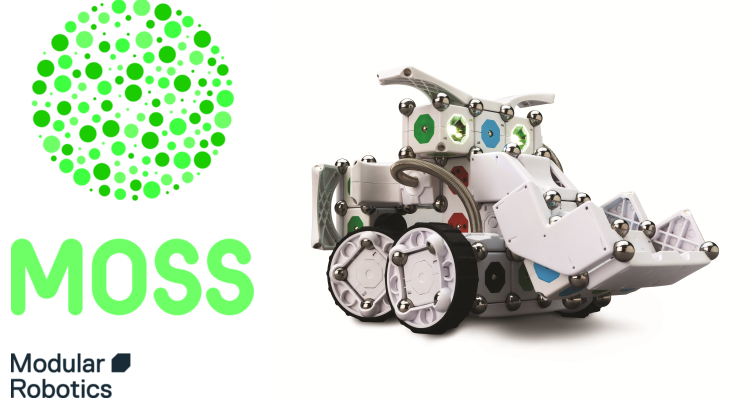
I Am Disappointed: MOSS Robotics Building Set
Friday, October 25, 2013
Homeschooling Word Boy
It has been a tough couple of weeks for me parenting Word Boy, because of his anxiety. I've handled it really well, but this morning I broke down crying talking to Raider about how I just couldn't face homeschooling. Yesterday was a very challenging day that left both me and Word Boy (and possibly also his therapist) exhausted, and he's doing better today but it's a pretty thin veneer. His perfectionism leads him to have anxiety attacks when he makes a mistake in math or doesn't understand something immediately, and it has been a challenge to me to be disciplined enough to make him do math anyway. A friend who studies behaviorism says that parents are very motivated by negative reinforcement. Negative reinforcement is the removal of an unpleasant stimulus--in other words, when a parent will do anything to avoid dealing with a tantrum, that's negative reinforcement. It's not easy for me to sit down to math with Word Boy when the likelihood is high that I'll have to spend half an hour dealing with an anxiety attack in order to get through what should be 10 minutes worth of math. He's behind grade level in math primarily because I have been negatively reinforced not to do math with him.
I've been doing a good job dealing with his anxiety-fueled behaviors during the last couple of weeks, which have feature not only yesterday's epic two-hour meltdown at the therapist's office but a four-day anxiety attack the other weekend. But I'm worn out. And the idea of trying to do homeschooling with him today when his equilibrium is so fragile just felt like too much.
And, honestly, I don't know why I bother "homeschooling" this kid. He and I decided to go the library, and on the way there, he asked about an errand I ran earlier, to renew the tags on our cars. I ended up explaining vehicle registration as well as automobile and homeowners insurance. He asked about the flood we had in our basement some years ago, which led to a conversation about sump pumps and the water table. From there, he gave me an impressive run-down of the causes and stages of a tsunami, which, like so many things, I have no idea where he picked up.
By this time, we were at the library, where, in a characteristic absent-minded professor slapstick, we had quite a bit of trouble figuring out how to open the unlocked door.
Once we were in, we browsed his favorite section, Juvenile Non-Fiction. He found a book on the Arctic and Antarctic; I found him a book on predictions people in the past have made about the future, which interestingly enough is something he had asked me about recently, so he was pretty thrilled. He found a Calvin & Hobbes collection he hadn't read. I found a book on Ideas that Changed the World that I decided to bring home just in case anybody wanted to look through it, and a book on teeth I bet Word Boy will like eventually. I found a book called Real-Size Animal Babies to show the Tiny Tornado, and then I slipped around to fiction and grabbed some Beverly Cleary for bedtime reading, because TT is all about the chapter books these days.
At this point, Word Boy, who is excessively conscientious, began to be concerned that we were checking out too many books. "Do you know how many things I'm allowed to check out on my card?" I asked him. "Fifty. And you could get your own card, and also check out fifty things. And the Lego Savant could get his own card, and then we could check out..."
"A hundred and fifty things," Word Boy said. "That would be a lot to carry."
He seemed reassured, but said again as we walked toward the circulation desk, "I don't know, it just seems like an awful lot of books." I spotted the librarian, who was just finishing up a conversation, so I hauled him over to her. "Librarian," I said, "This is Word Boy. Word Boy, this is the Librarian."
"Hello, Word Boy," said the Librarian. "It's nice to meet you."
I said, "Word Boy is concerned that we are checking out too many books."
The Librarian looked at him and said, "I don't think there's any such thing."
We ran our stack through the self check-out and hauled it to the car (Word Boy: "I have an idea for a new workout...it involves putting a strap around all of your books and then carrying them around.").In the car on the way home, he started reading about Antarctica, reading aloud little tidbits that interested him. "Did you know that the largest animal that lives on land year-round in Antarctica is a tiny insect? Did you know that there is evidence that Antarctica had a subtropical climate 70 million years ago, suggesting that the land that is now Antarctica used to be located near the equator?"
I kept saying, "I didn't know that. Wow, really? That is interesting." Finally, I said, "Ha, I guess it's your day to homeschool me."
Word Boy said, "Mom, I'm just reading stuff out of a book to you!"
I said, "How do you think I do it most days?"
He's reading in the big recliner now, having dealt with the perennial post-library problem of which book to read first.
I actually bought him a curriculum this year, because with me being in school it was very hard for me to keep up with homeschool planning last year, and things really fell apart somewhere around March. I was willing to pay someone to do my planning for me. It's been a mixed thing. I bought him a fifth-grade curriculum, and much of it is focused around grammar, spelling, and vocabulary lessons he doesn't need, so we don't waste our time on that. He finds the assigned books very interesting, but they're short and he goes through them quickly. This week, to try to address that, I assigned him a book that was supposed to be two weeks' worth of reading. He finished it Monday morning. Over breakfast. And then went on to read the next book, which was supposed to be for the next two weeks. And then read half of a biography of Alexander that is part of his big brother's curriculum and that happened to be in the stack on the table. I wanted to be able to hand the reins over to a curriculum. But this curriculum is not running the show the way I hoped it would. Word Boy's insatiable curiosity and drive for knowledge is. He's a fast horse galloping ahead at full speed; I'm doing my best to keep up; and our curriculum thinks maybe he's ready to learn a genteel trot.
Monday, March 4, 2013
Six Months in the Public Schools
So, the Tiny Tornado has been a public school student for six months now, and that seems like a good time to take stock. My older two, who are almost 12 and almost 9, have been homeschooled straight through, so I am now qualified to talk at least a bit from both the perspective of a homeschooling mom and a public school mom.
The first thing to say is that the Tiny Tornado is in an excellent school with an excellent teacher. I like and respect the principal so much that I am sorry that he won't be able to continue at the same school next year. The school has plenty of resources, and good music and gym teachers. The building is clean and in good repair. Teachers change their bulletin board and hallway displays regularly, and the effect is one of a busy school where students are engaged in a variety of activities.
I've only been disappointed in two of the staff. I volunteered at a book fair, and got to spend some time with the librarian. At least on the day I was there, she was cranky with the kids who came through the library; she seemed to expect the worst of them; and she spent some time talking with a teacher about her class in very negative terms while the students, sitting quietly on the floor waiting to be released to explore the book fair, could hear them. OK: I have been disappointed in three of the staff, since I should count that teacher as well. As a parent, I think that it's important for kids to overhear us sharing the good things we notice, and expressing our high expectations. I think it's also important that they not overhear us venting our frustrations. For instance, when Raider comes home from work I might tell him, "The Lego Savant was a big help today! He took out the recycling without being asked, and organized the other kids to pick up the living room floor." If the Lego Savant is sitting nearby reading a book, it's just fine with me if he overhears this.
But if we've had a challenging day, and I've maybe disciplined the kids--say I took away the TV for the afternoon because they were fighting over it all morning--I think it's important for the kids to know that, once the discipline has happened, or once we've worked out a disagreement, it's behind us. I turned the TV off for the afternoon: they don't need to keep being punished for it. I might need to rant to Raider about the rough day I had, but I'm not going to do it where the kids can hear me. At least, I shouldn't do it where the kids can hear me.
The teacher's conversation with the librarian was like that. She'd had a rough morning with her class, and rather than letting it go, chose to have a loud conversation about it with the librarian where the kids could hear her do it. I think this sends a terrible message to kids. It says that whatever disciplinary action was taken for their behavior was not enough, that the incident isn't really put behind them. It suggests that the teacher sees them in negative terms, that she expects bad behavior from them. I also think it's wrong to poison the well: a student who is struggling in class may find a change of environment to be a new chance to shine, and a new adult as an opportunity to form a positive connection. For how many "bad" kids has a librarian, a gym teacher, an art teacher, a coach, been the one adult who saw them differently? For how many kids has the library or the art room been a refuge? Children should not be preceded into a new environment by the suggestion that they are troublemakers.
I was quite distressed by this teacher's behavior, and I hope it was a lapse brought on by stress and not a habit. But I was also bothered by the librarian's willingness to engage; she might have said, for instance, "Tell me about it later! Let's get these kids ready for the book fair!" But from watching the librarian interact with kids for the next two hours, I would not expect her to have that kind of sensitivity. She was suspicious of their motivation and behavior; she questioned the buying choices they made as she was helping them check out (if you don't want the girls buying the Justin Bieber photo books, don't put them out. If you put them out, let them buy them in peace! Say, "I hope you enjoy it!" Not, "I'd have hoped you could make a better choice. Is that how your mother wants you spending your money?").
The other weak staffer is the art teacher. At the beginning of the school year, I was actually quite excited by the projects I saw on the wall, and that the Tiny Tornado brought home. The kids painted great big sheets of paper in interesting patterns, then used them for the background for themed art that incorporated painting and collage. They were bright and arresting, and if they were a bit cookie-cutter (everybody make a house! everybody make an elephant!) the medium was at least interesting, and provided a chance to explore different textures and techniques.
And then the next set of projects went up. And they were big splashy colorful painting-and-collage projects. And then the next one. And the next one. As far as I can tell, all the art that the children have produced so far this school year has been in this same style. Maybe I simply don't understand what the expectations are for elementary school art, but I'd have liked to see some variation. And for the Tiny Tornado's sake, more opportunities to work in three dimensions.
One day in the hallway, I was admiring some really impressive clay sculptures in a display case. The art teacher passed by, and I said, "Are these all student work? They're very good." He said that they were indeed student work, from past years. I was pleased. I was happy to think of the Tiny Tornado working with a teacher who was capable of getting that quality and variety of work from students, and who would give them the opportunity to do it.
My bubble was burst when the art teacher said, "They did those with the previous art teacher."
Who is she, I wonder, and where is she teaching now?
As far as the Tiny Tornado's own classroom goes, there can be no complaints about the teacher. TT's class is "Begindergarten." This is a special class for kids who are old enough for Kindergarten but whose parents didn't think they were ready for it. So: 20 kids. 17 of them boys. Most of them perfectly nice, reasonably well-behaved kids like the Tiny Tornado, who just need a little time to mature. A handful of them: handfuls.
The teacher is a young woman in her second year of teaching. She is full of enthusiasm and good cheer. She handles her kids' behavioral challenges appropriately and affectionately. She and the school practice catching kids in good behavior. I have seen her, in the middle of a loud and chaotic process of transitioning from one activity to another, see through all the movement and noise in the room to catch a kid who can almost literally never sit still in his one fleeting moment of perfect behavior, and call him out on it to the whole class ("I see Aidan sitting quietly, ready to get started! Good job, Aidan!").
The classroom is extremely well-organized, and her days seem very well-planned with activities the kids enjoy. My only concern about Miss N is that, as a former teacher myself, I worry that she is going to burn herself out. Sometimes I joke that I'm glad TT got her early in her career, before she learns to temper her enthusiasm and manage her energy. But, sincerely, I hope that she makes a productive transition to being a slightly-less perfect teacher who can stay in it for the long haul.
That said, I think that an excellent classroom in an excellent school is a perfect case study for what is wrong with public education, as well as what is right about it.
Even in the Begindergarten, this school district places a strong emphasis on academics from an early age. There is almost no activity--not even during class parties on holidays--that doesn't focus somehow on phonological awareness, alphabet knowledge, or math skills. They've done some really cool projects. For instance, recently the kids each drew a winter scene, framed it in brown construction paper like a window frame, and then the teacher added a picture she took of them from the back, as if they were looking out the window. These came out very charming.
They also came out mostly all alike. All the projects are cookie-cutter projects; there's no room for variation. If the kids are gluing together pre-cut pieces to make snowmen, the snowmen will have two eyes, a carrot nose, and buttons just like the model the teacher showed them. If a child wants his snowman to have three eyes, he will be told to do it like he was shown. The activities they do have a surface purpose: to practice the letter M, to count as high as 12, to make a little snowman. But the underlying purpose is also always to produce work that matches the model, to do it the way they have been told to do it.
The kids seem to enjoy the work they do; when I'm there helping with centers, they're having fun. And they are definitely experiencing multiple approaches to learning things: they might do a measurement project, a count-the-little-bears project, or a make-a-book project, each focused on a similar numeracy skill. But as they do each project, they are expected to do it exactly as they are told to do it. There is very little time in the classroom for children to make choices about how they will spend their time or what they will do. All the kids seem perfectly happy whenever I'm volunteering in the classroom (except poor B, who is temperamentally never happy: if they're doing centers, he wants to be doing morning meeting. If his group is at the math center first, he wants to be at the puzzle center. When he gets to the puzzle center, he doesn't want the puzzles that are available, he wants the firefighter one another kid has already started. And so on. I'm actually impressed with how Miss N and her classroom aide are supporting B in the classroom, and I hope he grows into a sunnier disposition, poor kid). But I can't help but wonder about the long-term effect of thirty-five hours a week, of "Do exactly what you're told. Produce exactly what you're told to produce."
The Tiny Tornado has learned a lot. This cannot be denied. He knows all his letters, is making big progress in matching letters and sounds (and can now identify consonant sounds at the end of words as well as the beginning!), can write all his letters, can count past 20 (though it's hilarious when he gets to 20-10 and 20-11), can recognize numbers into the teens. He is ahead of where both his brothers were at the same age, because we didn't do much systematic instruction when the Older Two were 5.
I am neutral on whether this is a good or bad thing. Both of the Older Two are perfectly numerate and literate now, which suggests that it is not necessary to spend hours and hours in direct instruction when kids are young. On the other hand, the TT was developing an interest in letters and numbers before he started Begindergarten, and has enjoyed learning them this year. It hasn't been stressful or negative, and his progress spares me the years of anxiety I suffered about whether the Lego Savant, now a voracious reader who devours multiple novels a week, would ever learn to read. As far as I can tell, TT's classmates seem to be enjoying themselves as well.
One area of flexibility in the classroom is that the kids are welcome to be where they're at: at a journal-writing center, for instance, some kids will dictate, some kids will write with spelling help, and some kids will write using their own mix of correct and invented spelling, and this is OK. This ameliorates much of the concern I might have had about the relentless emphasis on academics for what is essentially a class of pre-kindergartners. But I wonder what it will be like next year, when they move on to kindergarten or first grade. Last year, at the kindergarten information night, I was very uncomfortable with the academic expectations for kindergarten, though I suspect I'll be less concerned now that TT will have had a year of what is essentially Kindergarten Readiness. Still, I plan to visit a nearby district I've heard good things about, and consider whether I might be able to send him there under Schools of Choice.
I have heard a lot of criticism of the district from the parents of kids in middle and high school, from young adults who recently graduated from the district, and from the one or two kids I've met while they were attending the high school, about the effect that academic pressure has on the students. The district is affluent--at least 3 of TT's classmates are the children of doctors, for instance, and other parents are research scientists at the university. I hear that there is quite a bit of class-based tension at the middle and high school levels, and that it can be an uncomfortable setting for students whose families don't vacation at ski resorts or buy late-model cars for sixteenth birthdays.
Our decision to send TT to school was made pragmatically for the family: I needed childcare, and he needed stimulation. I am happy and relieved that it has worked out so well. Although I miss the wonderful open-ended art projects he used to bring home from his Reggio Emilia-inspired preschool, I am pleased with his academic progress (and so is he). Having some first-hand experience of the public school reinforces my belief that it would have been terrible for the Lego Savant (all those people around! all the time! never a moment to yourself! never a moment to think quietly!), and OK for Word Boy, who is more adaptable and inclined towards traditional academics. Though I think it has been good for Word Boy, who thinks too much of other people's preferences, not to be reinforced in his tendencies. I could do a whole nother post on that. Maybe I will sometime.
I've never imagined that the Tiny Tornado would stay in school long-term, and I continue to hope that's true, though it's not clear how my plans to become a Speech Language Pathologist will affect our homeschooling in another few years. I continue to be concerned about how factors like the pressure to conform, and the relentless beat of academics, will take their toll as the years pass by. The Tiny Tornado wants to homeschool for first grade, or possibly even this next year for Kindergarten. For my part, I very strongly do not want him to continue in this district past elementary school. We'll have to see what time brings.
Thursday, March 31, 2011
Lego WeDo Review: Now that we've been using it awhile
Building the robots is still very fun, and the programming interface is bright and easy for Carl to use. The information is well-organized and very clear, for both me and him. But we have some consistent problems with our robots. I mentioned in my first review that WeDo uses standard Lego bricks for construction, rather than the girder-and-connector building style used in Lego Mindstorms robotics and Lego Technics. The top image at this page is of a Mindstorms robot that shows the girder building components. If you scroll down to the bottom of this page, you can see some images of WeDo robots for comparison.
The WeDo robots are very easy for Carl to build, and they look cute. The problem is that the standard Lego bricks just don't hold onto each other the way Mindstorms NXT girders do. So, under stress, they come apart. Our boat-on-a-stormy-sea WeDo robot, for instance, regularly beat itself to pieces. This is very frustrating for Carl.
Another problem we've bumped into is that many of the robots can really only do a single thing. We were spoiled when Carl chose the Dancing Birds robot as his first project; once you've built it, you can program the birds to spin in the same or opposite directions, at different speeds, for differing durations, and with different sounds. They can be made to speed up and slow down. Carl played around with programming his Dancing Birds robot for a long time over several days.
Alas, some of the other projects are less playable. One reason the boat kept beating itself to pieces was that it couldn't tolerate the speed of the motor being adjusted any higher than in the sample program; the other is that the Lego studs just weren't strong enough to hold the boat's stand to the baseplate when there was repetitive movement.
Today we built a giant that stands up and roars; once we built it and copied the sample program, we couldn't figure out anything else to do with it, except run the motor in reverse so it sat down again. You had to run the motor for a very specific amount of time or the giant either didn't stand all the way up or was flipped over by the lever controlling it. The rubber band connecting the motor pulley to the lever pulley came loose about half the time. We watched the giant stand up once; Carl experimented and found 12 different ways for the thing to go wrong; and 10 minutes later, he was done. His verdict? "Well, that was boring."
So, what do I think overall? There are still some good qualities to the program. The robots are designed to demonstrate the use of certain mechanics; for instance, our standing-up giant was raised by a lever that was driven by a worm gear. The software points out these things, and Carl finds them interesting. But if mechanics is the point, then perhaps some kits that introduce simple machines, either from Lego or elsewhere, would be more cost-effective. I know that a big part of what is most fun for Carl is experimenting with programming the robot to do different things; if too many of the robots are single-action, that's too many days he's walking away from the computer with the word "boring" on his lips. We still have a lot of robots to try out, so much will depend on the ratio of good ones to duds.
Lego says the WeDo kit is for kids 7 and up; Carl just turned seven last week, so he's at the young end of the range for it, and yet one of my thoughts is that this might be better for younger kids. Or maybe for 7-year-olds who haven't been fellow travelers for their older brothers' Mindstorms robots already.
My buying advice? If $180 isn't a lot of money for you and you have a 5, 6, or 7 year old who is really into robotics but not ready for Mindstorms, go for it. There is some fun to be had here, and some basics to learn. Otherwise, wait a couple of years until your kid can accompany you on some Mindstorms adventures; Mindstorms has been a much better investment.
Monday, February 28, 2011
Premature Curriculum Review: Home Science Adventures
When we finished the year's worth of McRuffy Press science we had, I considered buying another year's worth. But they only go through third grade in science, and the sample lessons looked both repetitive with what we'd already done, and kind of basic even for Carl, who's notionally a first-grader this year but who is a little advanced academically, I think.
I tried Building Foundations of Scientific Understanding. I loved the idea of it--a comprehensive elementary science curriculum that focuses on the underlying practices and concepts of science. It seemed well-structured and like kids would really understand not just specific science facts and concepts but some things about how science works. And I liked the price: just $24 for the book.
In practice, I found it unusable. It's the kind of science curriculum that "just uses objects you have around the house!" But I never have the objects. When I ended up going to three stores to find a certain kind of balloon for one lesson, I was about ready to give up. I am learning to accept about myself that I don't want to have a long planning time for our homeschooling, so a curriculum that required me to think a week or more ahead about what supplies we'd need, plus take the information in the book and figure out how to make a lesson out of it, was just too labor-intensive for me.
In addition, the book is poorly laid-out; there are no chapter headings, for instance, so it can be difficult to navigate to the lesson you're looking for, or tell when you're there.
I've been on an e-mail list for families using BFSU, and so I know that some people have made it work for them and love it. And the lessons we did manage to do went well. But I now admit that I want something more packaged and more structured; with such an up-front commitment in prep time, I found with BFSU that we were ending up not doing science because I hadn't found time for the planning.
When I happened across Home Science Adventures, I knew the boys would love it. It's all hands-on science activities, organized into six topics: light, insects, microscope explorations, astronomy, birds, and magnetism. You can buy individual topics or sets of three. It's designed to be used with multi-age groups of kids.
I wasn't sure, from the website, whether it would provide the kind of information about scientific methodologies or topic-spanning concepts that I also wanted the kids to be exposed to. But I decided to try it, on the strength of the boys' enthusiasm, with the thought that I could supplement it with additional readings if needed.
We bought a three-topic set: Light, Insects, and Microscope Adventures. It comes with one pocket microscope; I paid for two extras, because I am wise.
So far, we've done 3-5 lessons in each topic, and the boys are loving it. The lessons are brief and very much focus on the kids experimenting and thinking about what they find. They're encouraged to record and analyze data; Eric and I did a lesson in the Light topic today that asked him to analyze the chart of data he'd made and predict what would happen next. The Insect Lessons have been less "here is the life cycle of the honeybee" and more, "How do you classify these bugs? Which characteristics define an insect?" I loved that the first couple of lessons in Microscope Explorations taught about using the microscopes not by giving instructions but through experimentation: "OK, now do this. What happens?" The kids were invited to learn through experimentation that the image in the microscope is both reversed and upside-down, and to figure out that, although it says on the side that they magnify 30x, they really magnify about 22x.
So, the stuff I was hoping to expose the boys to, about how science is practiced, and about concepts like classification that transcend a single topic, seem to be worked in.
And, I must say, when they say everything you need is in the box, they mean it. They don't assume you have scotch tape; it's in the box. If you're going to need paper cups for a lesson, the paper cups are in the box. There's a packet of honey, a paper clip, and a spoon in there. The only things you're going to need that aren't included are an onion and a slice of bread, and I'm pretty sure if they could have figured out how to include those, they would have.
The website claims that the 43 lessons in our box will constitute a whole year's science if done once a week. While that's technically true, I suppose, we find that the individual lessons (contained on one double-sided piece of paper) are so short and engaging that we usually do 2-4 at a sitting. In addition, my boys love science, and are enjoying these kits, so much that I expect we'll do science more like 2-4 days a week. So this isn't a year's curriculum for us, I don't think. But I think it's going to be a very fun few months.
Friday, February 11, 2011
A Surprisingly Good Day
I could not think how to salvage the situation. But after awhile I wandered into the hallway and said to the closed doors, "Um, guys, *sniff*, I'm going to go ahead and graph our Mystery Class data so we don't fall behind. Anybody who wants to come help, *snuffle*, can come help."
The boys wandered out to the living room, wiping their noses on their sleeves, and we transferred our sunrise/sunset data to the data sheets, calculated the photoperiods for each of the mystery sites, and charted them on our graph. We found and fixed a couple of our mistakes--calculating photoperiods is surprisingly tricky math--and were astonished that the site that got 24 hours of sunlight just a week ago got only a little more than 18 hours a week later! We checked and double-checked the numbers and that's what they said. I'll be curious to see where it is--the South Pole is still in full-time daylight this week. So it's someplace north of there.
Then we did an activity where you find other locations that are at your latitude and check their photoperiod. We did Sapporo, Japan; Florence, Italy; and Changchun, China; all of which we found by using the globe we got for Christmas. They all had photoperiods within a few minutes of ours. It was fun to see the boys figure out that photoperiod is all about latitude; they had previously thought that places with similar photoperiods must be close to us but now they get that they could be very far away.
Then we worked on this week's Lego Quest challenge. The challenge was to build something using 30 specific bricks, and we made a set for Yehva, so when she got home from preschool, she did it, too. I'd post pictures but the boys are excited that their creations might be on the website next week so I'll save it for then.
Doing fun stuff together got us feeling much less horrible, and the rest of the day went pretty well. Yehva and I had to run to the store at one point to buy eggs so we could make cupcakes, and I was reminded of why I am always running out of things: I simply cannot do the grocery shopping with Yehva. This is what it was like just running into a convenience store for one item:
Me: OK, Yev, just so you know, we're only buying eggs. We're not buying anything else.
Yehva: OK.
We enter the store.
Yehva: Mama, they have candy!
Me: I see.
Yehva: Can I have some?
Me: Not today. Today we are just buying eggs.
Yehva: But I'm hungry.
Me: We'll have lunch when we get home. And we're making cupcakes.
Yehva: Can we get donuts?
Me: No. We're just buying eggs. Another day we can get donuts.
Yehva: I want donuts.
Me: Donuts are certainly tasty.
Yehva, escalating: I want donuts!
Me: No donuts. We're just getting eggs.
Yehva: I see cookies.
Me: I see the cookies, too.
Yehva: I want some cookies.
Me: Sorry, we're just here for eggs.
Yehva stomps her foot: I want cookies!
Me: Not today.
Yehva picks up a package of bakery cupcakes: Can we get cupcakes?
Me: Yehva! We are buying eggs--and only eggs--so we can *make* cupcakes! We are not buying cupcakes!
Yehva: Then can I have some candy?
Wednesday, February 9, 2011
Public School Mom: It's a Whole New Skillset
I am following this mom's saga with the principal with great interest, because I simply can't see myself in that role. I'm much more the type to suck it up and then bitch to my friends. I have often thought that one reason we homeschool is that I am not assertive enough to be a good advocate for my children in the public schools.
And yet, there I was at 9:30 this morning, taking a tour of the public Montessori school a mile down the road, because one option for Yehva next year is to enter the pre-school there. It's close to our house, it might be a good option if she ends up in the public schools (likely because even the very reasonable tuition at the private Montessori schools around here would be a stretch for us), and their preschool program, while fee-based, is cheaper than the other Montessori schools near us.
The tour was very interesting. As you'd expect in an affluent suburb, the school itself is in good shape, clean and shiny and freshly painted. Every classroom we visited had computers in it; there's also a large computer lab. Instead of blackboards or whiteboards, the classrooms have "smartboards," which can display material from the teachers' computers or be worked at directly; apparently they're touch screens and also have special markers they can be written on with, though we didn't see one in action.
I appreciated the principal's honesty about the extent to which the school is "compromised" Montessori. "We're as Montessori as we can be given that, as a public school, we are not exempt from standardized testing or from meeting state curriculum guidelines." In other words, they're pretty darn Montessori for the 3-year-olds, but less and less so as the kids get older.
Still, I liked the 3rd and 4th grade classroom we visited. There were no desks in rows, though there were tables available for kids to work at. Kids were moving around freely, and engaged in a variety of activities around the room. I liked the atmosphere in the room much better than most classrooms I've been in.
While I know a couple of moms who have kids in the school and are very happy with it, I also know a couple who've had serious problems, in both cases with a teacher refusing accommodation for a disabled child. One of the families left the school because of it. So my anecdotal impression of the school is very mixed.
I'd be fretful about the overwhelming whiteness of the student body in any case, but this is Yehva we're talking about--she's the only AA kid in her preschool class, and if this keeps up, at some point she's going to notice. Is that a problem? I don't honestly know. I have a friend who is black and who lives in a predominately white area where her kids are often the only black kids in their classes and activities, and she's really shruggo about it; she sees it as just a fact of her kids' lives. But I think it's probably different if your parents and extended family are also black--Yehva's the only black kid at home, too. So one of the questions I have, if I'm going to be a School Mom as well as a homeschooling mom, is: Should I consider putting Yehva in one of the Lansing charter schools, or into Lansing Public Schools as a schools of choice student? Is that important enough to choose a half-hour commute over the one-mile stroll? Or to choose a struggling school district over one with a 97% graduation rate, that sends most graduates to college? Which does Yehva need more: half the kids in her classes to be black, or half the kids in her high school to be taking AP classes?
I don't know.
On the one hand, I've been pretty in touch lately with what we give up by homeschooling, things the schools offer that are a challenge to get at home, or in the homeschool community (somebody else to teach Eric Mindstorms would be very welcome, for instance. Both boys could use a bigger peer group, I think, despite their introversion. And it recently came to my attention that neither of my sons--who are almost 7 and almost 10--knows the alphabet song, a deficiency that can only be laid at my door). On the other hand: at this morning's tour, one of the moms asked how the school handled it if a kindergartner, say, was ready to move beyond kindergarten-level work. The principal threw around a lot of glittering phrases about "stretching" and "exploring," but the upshot of her response was that a kindergartner could not be allowed to do first-grade work, because then in first grade they'd have to do second-grade work, and in second grade they'd have to do third-grade work...and so on. And this would be just a big pain in the butt for everybody. "Of course, we do have a gifted education consultant available through the district," she said, but then she back-pedaled to make it clear that they'd only call on the consultant in extraordinary circumstances, if a kid was "really above...I mean really, really above...." In other words: probably not for your kid. This is just by way of saying that I am aware of the gaps and deficiencies of schools, as well.
I also came away not sure Montessori preschool is for Yehva. I love Montessori classrooms, with their orderly shelves of interesting things, and the kids sitting around at their little rugs doing their "works." But the PPK classroom we saw today didn't have what most preschools do: a texture table, an art area, a dress-up/pretend play area. I've read Maria Montessori, so I have a pretty good idea why this is (it's all about the purposeful work!). But I think those are some of the things Yehva likes best about preschool. I think she'd like the Montessori "works"--she loves manipulating things--but I also think she'd miss those other things.
Maybe school isn't the right thing for her at all. She's extroverted; she's also high energy. She rarely sits down. It may be that she will turn out to be a very bad fit for the classroom. Maybe we'd be better off homeschooling her and using our money to hire an athletic college student to spend a couple hours a day taking her snowboarding and waterskiing and rappelling, and teaching her to play baseball, basketball, soccer, and football (she wants to play football. She wants to play every sport she has ever seen anyone play, in person or on TV).
I wanted to love the public Montessori, because it's the path of least resistance for us: it's close, it's probably better than the traditional public schools in some ways that matter to me, if she goes there for preschool she's guaranteed a kindergarten slot, we'd have to pay for one more year of preschool but then it would be free. I liked it, at least some things about it. Enough to send Yehva there? I don't know. How much more would I have to love a different school to pay $6500/year in tuition? I don't know.
I might find out, though. I sent off an e-mail asking to set up a tour at one of the local private Montessori schools. (I also know parents of kids in this school. Some of them love it. Some of them don't. One pulled her daughter because she thought the school was pigeon-holing her daughter as a "troublemaker." Her daughter was 2. I talk to too many parents. It muddies the waters.) Anyway, I sent off the e-mail. "Practically any weekday morning is fine for me," I said, "except that we'll be out of town from February 16-22." I got a very prompt e-mail back saying that I'd been pencilled in for a tour on the morning of the 16th. *sigh*
One of my friends pulled her son out of elementary school last year and tried homeschooling. "There are too many choices," she complained to me not long after. "When he was in school, they made all these choices for me!" As someone who has spent hours reading up on math curricula on the internet, and hours reading up on science curricula, and hours reading up on Language Arts curricula--and this only after spending years going back and forth about whether to use curricula at all--I could sympathize. But I find that the decisions involved in sending a kid to school are just as hairy. I'm lucky, I suppose, to live in a place where there are really very few choices, or my head would explode. As it is, I think I'll go take half a Xanax and lie down with a cold cloth on my head until the palpitations stop.
Thursday, January 20, 2011
Premature Curriculum Review: Lego Mindstorms NXT Mayan Adventure
I have resolved, myself, to try not to write about curriculum until we've really given it a shot.
And I am breaking that resolution now. Sorry.
One of Eric's Christmas presents was the Lego Mindstorms NXT: The Mayan Adventure homeschool pack, which includes the book and some extra parts you will need for some of the challenges. We haven't started it yet, but I read through it the other day and am--yes--very excited about it. We're going to work on it this afternoon, and I will certainly try to post more as we get into it.
The book sets up five robotics challenges in the context of a story about a boy with an NXT kit who goes on an archaeology expedition with his uncle. They find themselves at a pyramid that has, as one of its security features, tiny tunnels leading to hidden switches and doorways, designed to be navigated by trained spider monkeys. The team has no spider monkeys. But they do have an NXT kit! So the robots need to be designed to do the spider monkeys' jobs. For instance, the first challenge is to build and program a robot that can travel ten feet down an 10-foot tunnel, turn 90 degrees, travel 8 feet, turn 90 degrees again, travel 3 feet and press a switchplate, and then turn around and come back out again.
Each challenge is set up over four chapters: one that tells the story of the boy; one that I really like that uses a planning and design worksheet to think through the specific tasks the robot has to do and how they might be done, and what constraints exist (for instance, this first robot has to be pretty narrow to get around the corners, and it has to be able to turn, which means using two motors); and then one about building the robot, and one about programming and de-bugging it. I like that the chapters on building and programming present various options, like using either the optical sensor or the pressure sensor to tell the robot when it's reached a corner, and model a trial-and-error approach. For instance, the author writes that it took four tries for him to get his robot right, and he describes what he did for each try, what went wrong, and what he tried to fix it.
I don't know how much patience Eric will have with the design process part; he likes to jump into things. But I like the way the book is organized. We're going to take our first shot at it this afternoon; I'll let you know how it goes. If I can find the battery charger for my camera battery, maybe there will even be pictures of our robot.
UPDATE: This afternoon we read the first chapter of the story, and the chapter on the Design and Planning process. To my pleased surprise, Eric loved the Design and Planning part, which has pre-printed journal pages on which you name your robot, describe in a paragraph what it will do (he dictated to me), break its job into a numbered list of individual tasks, think about constraints ("it has to be small enough to turn the corners without bumping into the wall"), brainstorm ideas, and sketch robot ideas. He was really into it. He wants to try something different than the author; the author's robot turns around and goes forward out the tunnel, but Eric wants his robot to back up. He was also the one who then spotted the flaw in his plan: the robot will need a sensor on the back, then, to keep it from bumping the walls when going backwards, as well as one on the front. He still wants to try this plan even though it will make the robot a little bigger.
After we did that part, we took a few minutes and sorted all his Mindstorms pieces into their proper places in his storage bin, and then he was ready to stop for the day. He's excited to build and test his robot tomorrow, and to show his dad his Design and Planning journal this evening. Fun!
Friday, January 14, 2011
Our Experiment In Structured Homeschooling
My kids are 9, 6, and 3, just to remind people. And with Eric, my oldest, especially, we haven't done very much organized academics. One reason is that he wasn't ready for it until just a little while ago. It's kind of a gift to have Carl, who is really into schooly stuff, because having a six-year-old who is not only ready for academic work but likes it has given me a picture of what that kind of six-year-old looks like. And Eric really wasn't it.
The other reason we haven't done structured homeschooling is that I really like radical unschooling and many of the people who practice it. I've spent a lot of time in discussions with radical unschoolers, and their deep respect for, and faith in, their children has inspired me, and shaped my parenting for the better. For a long time, I really wanted radical unschooling to be the way we lived our lives.
But we're not doing that right now. The boys and I are doing a pretty conventional assortment of schoolwork five mornings a week: reading, math, language arts, handwriting, science, a daily non-fiction read-aloud. We're adding history soon. I'm teaching Eric some piano basics, and if he likes it, will encourage him to take lessons with a real teacher.
So, the two questions I've gotten are: Why? and How's it going?
There are several reasons why. The first is that I was very sick for the better part of two years (finally better now, thanks for asking--almost back to normal!). Last year, I had really drifted into what RU parents call "unparenting," neither doing structured homeschooling nor creating the kind of enriched life an engaged unschooling parent strives for. I just didn't have the energy to do anything else; I couldn't stay awake for more than about five hours at a time, and even when I was awake, I was exhausted. It wore me out just to stand for five minutes to cook lunch, or to climb one flight of stairs, or to walk from one end of the house to the other.
The boys are both very introverted, so they were not at all unhappy to be left to their own devices. But I was unhappy; I wanted them to have more than that. And I couldn't give it to them. I knew that if things didn't improve, they would be better off in school than at home with a mom who was that sick.
The problem? Eric, at 9, couldn't read, couldn't do formal math, couldn't tell time. Although he is very bright and knows a lot, he was way behind grade level in every academic subject. Traditionally, I had pooh-poohed the idea that homeschoolers should pay attention to what the local schools are doing. "If I wanted my kids to do what school kids do," I would say, "I'd send them to school."
But, faced with the possibility that my kids would have to go to school, I simply could not imagine how Eric would make that transition. And I realized that my decision not to do formal academics limited our, and his, options. (Carl, on the other hand, would have no problem, academically, sliding right into a first-grade classroom. He's been doing phonics and math workbooks since he was 4. He likes that kind of thing.)
I'm finally doing better, and I expect the boys to keep homeschooling. But the future is not predictable. I could get sick again, or one of the kids could choose to go to school. I think we need that option to be available to us.
Another reason we're doing structured homeschooling is that I have decided to be honest about who I am. I like academics; I always have. (This is separate from liking school, which I didn't, until I got to college. At least after I grew out of the teacher's-pet elementary school years.) Perhaps the boys would, too, and I was denying them that chance. Also, I never really quite bought some of the RU arguments. "Kids pick up all the math they need by living their lives," people would say. "They learn fractions from measuring ingredients, geometry from laying out garden plots." Sure. But there's a big difference between being able to do the practical part of something, and understanding the concepts that underly it. I have always liked to understand the concepts, and I wanted my kids to have that, too. And finally: I'm a planner, and a checker-off of items on lists. I like knowing where we're at, where we're going, and what steps we have to take to get there. I like routines. This is how I've always been, and it's a challenge (though not impossible) to express that side of me in radical unschooling. I felt adrift.
Finally, the most important reason we're doing structured homeschooling is that I think Eric needs it right now. Carl likes it; that's a different thing. Carl is so cheerfully enthusiastic about everything, so generally easy-going, that I think he would do fine in school, fine with structured homeschooling, fine with unschooling.
Eric, though: Eric is easily frustrated, and he will not stick with something if it's frustrating him (there are exceptions; he can also get kind of fixated on finishing something and will bang his head against a wall even if it would probably be better to take a break and come back to it fresh. But for our purposes here: easily frustrated). And he doesn't like to try something unless he knows he'll be successful. He also has trouble with transitions, and he does not like new things. Our parrots see any new person or thing that comes through the door as a predator that might decide to eat them; Eric's outlook on life has a bit of that, as well.
I wanted to stretch Eric, expose him to new things, and give him the experience of sticking with something regularly, to see how that kind of sustained effort can be fruitful, to feel what it's like to be stuck and keep at it and then have the breakthrough. And he is having this experience, and he likes it.
I know that radical unschoolers will say that there's nothing I'm looking for (except possibly being on-track to go to school if needed) that we couldn't get some other way. And I'm sure they're right--or right, at least, that some other family could find a different way to get the same benefits. But this is what we're doing now.
How's it going? Not always perfectly. Eric had a rough time in November and December and was very resistant and rude to me. We took a long break, and then had a Serious Talk about his options. He told David, spontaneously, that he felt like he had gotten older during the break and would be more able to cooperate. He told me he was bored during the break and wanted to do more; he asked for my help, and he asked me to push him if he resisted me. Since we started up again, he's been into everything we've been doing. He likes his math, he's making big progress in reading, he loves anything science-y, especially if there's a messy experiment to do. We just started language arts, and Eric was surprised to discover he really likes learning about how sentences work and what their parts are. Carl is not sorry when we have a day off, but he simply loves everything. If I tend to talk about Eric more than about Carl, it's because I think about Eric more, because with Eric, there's always some problem I'm trying to solve. Carl? Not so much. I told some friends recently that if Carl were our only child, and didn't have siblings to sometimes annoy him to the point of explosion, people would hate me for the perfection of my life.
I find that we all like having a structure to the day--we start school work when David leaves for work, and it takes us between an hour and three hours depending on the day, how much we're trying to do, whether Yehva's at preschool or here, getting into things. I try to do something with the kids in the afternoon as well: work on Eric's Mindstorms or Carl's Lego WeDo robotics, build something with the snap circuits, bake something, play a board game. Carl, Eric, and I all seem to respond well to having a routine. The rest of the day goes better.
One of the best things that has happened is that Eric, especially, keeps discovering things he didn't know he could do. The other day, I asked him to try to read a paragraph in his science workbook; I wasn't sure he could do it, and normally would have read it aloud to him, but I decided to let him see how he could do. To his delight, he was able to read it, except for the unusually-spelled name of a scientist. Yesterday, his language arts curriculum asked him to write two sentences including adjectives. He has never done much writing--I think it falls into that category of things he can't try because he doesn't already know how to do them. I told him to give it a try, to not worry about spelling things correctly, just to do his best. He wrote two sentences about one of our parrots: "Vito is hapy He is red and green." He asked me to check his spelling of "red" and I helped him sound out "green." And he read Vito's name off the nameplate on his cage. But still!
He was astonished and thrilled. He simply had no idea he could write a sentence. He wanted to cut it out of his workbook and hang it on the wall (I should have just said yes, but my orderly mind said, "But we haven't done the other side of the page yet!" *sigh* I wonder where Eric gets his tendency to inflexibility?)
I know that there are other ways that all of this could be accomplished. But, given who we are and what we need and what we enjoy, I think this is right for us. Things will probably look different in six months, or next year, but for now we're getting a lot of good out of what we're doing. I'm not at all sorry we waited to do formal academics with Eric; he's bright, but he just wasn't ready. In the last six months, he has really "caught up" developmentally (and even surged ahead in some interesting ways). Now he's ready, and I think it's good.
Thursday, January 6, 2011
Lego WeDo review
WeDo comes with software; a collection of bricks, motors, and sensors in a reusable storage bin; and a big notebook full of information and instructions. There is also a set of four booklets, each with building instructions for three robots. I remember when we first got Mindstorms, how overwhelmed I felt--I just didn't know how to get started. WeDo, on the other hand, is made for schools, and I joked on Facebook yesterday that they're written like the subtext is, "Dear Elementary School Teacher, we realize it's possible that you just found out that in one hour you have to teach robotics to 27 second-graders, so we're going to make this easy on you." There are simple instructions and handy flowcharts about what to do first and what to do next. I love it.
The WeDo robots are powered by the computer's USB port, so they're always tethered; you're not going to be building a self-playing chess set or a robot that climbs a tree out of this thing. The building style is traditional brick based, so the things you make have that angular old-skool Lego look. (As opposed to Mindstorms, which uses a girder-and-connector style based on Lego Technics. I realize this will be technical blah blah for most of you. But I read a blog post about it recently and am trying to sound like I know more than I do.) But the things you build--two little birds that spin and dance, a sailboat that is tossed on a stormy sea, a clapping monkey--are very cute.
The programming interface is very bright and simple. WeDo has an icon-based graphical programming interface like Mindstorms, but much simplified (GeekDad has a screenshot here). Carl found it very easy to understand and use: you lay down a "start" block, then you can add blocks that run the motor, that play sounds, that act as a timer, and so on. You can have more than one program laid out on the screen at a time, and when you run a program, the block that is running lights up so you can easily connect what the robot is doing to what's in the program.
With Mindstorms, you have to write the program, compile it and download it to the robot's brick, and run it. If it doesn't work, you're back to the computer. It can make the de-bugging stage a bit lengthy. The WeDo interface makes trial-and-error quick and easy; you can write a program, run it, change it, find a bug, fix it, try something else, write a new program, and run it, all in about two minutes.
The trade-off, of course, is that the robots are very limited. You get a USB hub (kind of a little power brick), a motor, a tilt sensor, and a motion sensor. The designers have done a lot with a handful of gears and pulleys, but this is more like a tasty appetizer than a full robotics meal. With Mindstorms, there are a great many idea books, blogs, and websites, but not so with WeDo; at least not that I've found yet. I don't think it's leaked out of the schools market much. I'll be interested to see what Carl does when he's worked through the Activity Pack robots.
The WeDo activities are clearly designed to get kids thinking about how the gears, pulleys, and levers are operating. The interface for each activity starts with a short animated movie about the robot you're going to build, and then, before the building instructions, will say something like, "Our robot uses a motor to turn a small gear. The small gear turns a large gear, which operates a lever." I read it to Carl and he listens politely, but he really wants to get to the part where he can program the funny noises.
I paid an extra $50 or so for the Activity Pack, which has both building and programming instructions for a dozen projects, so the whole schmoo cost about $180, which is pricey (it's actually sold together as a "homeschool" pack now). I agree with some quibbles in GeekDad's review: if the computer didn't have dual monitors, I don't know how I'd have gotten out of the full-screen programming interface, and I still haven't quite figured out how saving programs and re-opening them works. The notebook could use a Quick Reference section; there was no easy way for me to look up how to save a program, for instance.
Still, I feel like we got our money's worth, and Carl has declared it the best Christmas present he ever got. The robots are simple to build and putting together programs is a snap. GeekDad says that you should consider whether you have younger relatives to hand it down to when deciding about the investment, and I admit I have already found myself wondering who among my homeschool pals might like to borrow it when Carl's done.
This is the second time I've bought something from Lego Education, and I've been pleased both times (the first time I got a set of Simple Machines activity kits), not least because of the little plastic bins everything comes in. Sometimes I browse the Lego Education catalog and think I could build my kids' whole curriculum out of it.
Thursday, August 12, 2010
My More Moderate Views on Education
1. I have been a teacher. Not in the public schools, but in their closest collegiate analog, the community college. In addition, I taught a class (freshman composition) that was required of all incoming students but which almost none of them wanted to take or expected to enjoy. From this, I have first-hand knowledge of how impossible it is to teach students who are in your class by compulsion. I also know first-hand that a system can be less than the sum of its parts; that is, it can be full of mostly-competent people doing their best according to their lights and with as much goodwill as they can muster, and the system overall can still be failing (in my department, after we instituted a portfolio review process, we had a failure rate of about 1/3--and this was of the students who made it to the end of the semester. Another sizeable chunk tended to disappear partway through). So I have tremendous sympathy and respect for individuals in the schools, doing their jobs. And sympathy for the ones who, like me, burn out and leave.
2. I homeschool for what seem to me like good reasons, but I think the truth is that my kids, and the kids of people like me, would probably do OK either in school or homeschooled. There are some reasons of temperament that I think this is less true for Eric than for most kids, but in general the children of middle-class and upper-middle-class families, with educated, involved, loving, functional parents and resources for books, travel, trips to museums, and so on, seem to learn what they need to learn and do all right. You hear a lot about how the American school system is failing--all those media reports that we're second-to-last in some international test of math skills. But we really have at least two different educational systems in American, and my kids (and your kids, probably, if you're reading this) are in the one that works pretty well.
A few years ago I read a book whose title I can never remember, something like Making Sense of Research in Education. It looked at some of the typical education headlines and examined the research behind them. One I remember is those international tests. According to the author, most countries have more explicit tracking than the US does, and when they participate in these tests, they choose students from specific schools to participate. In some cases, they choose the students individually. IIRC, only the US and Canada actually provide random, national samples. So "America came in 26th out of 29 countries," for instance, might be a statistic that compares all American children to only the children who've been tracked into academic schools in other countries, or an even smaller sample than that--like comparing all American kids to the equivalent of kids at the High School of Science and Technology. When the American sample is sorted by race, the white kids move up to second or third; the black kids drop even lower in the rankings.
So, when people urge me to put my kids in school and get involved in my local school district: well, I know my local school district has problems (I've heard the kid culture is unusually toxic, for instance), but for the most part, that school district doesn't need me, or my kids. There's a case to be made that Lansing does, and I know that one woman in my Quaker meeting carries a concern about Quakers taking their kids outside the Lansing school district. But there are bigger problems with education for working-class people, poor people, people of color, immigrants. I don't know what to do about those problems, either as an individual or as a society. But I do think both I and society could be doing better in this regard.
3. For all my bluster, I am not a zealot about home education. I don't think it's necessary or right for all kids (or their parents)--not even necessarily for all of mine. Yehva, for instance, is so high-energy and extroverted that I will not be surprised if we put her in kindergarten just to see how it goes (yes, I know extroverted children homeschool...but poor Yehva was born into a family of introverts, and I think it will always be a challenge to get her enough stimulation if she's stuck with us most days. But we'll see). I am also less sure about what I'm doing than it might seem from my writing; one of my weaknesses as a homeschooler, I told a friend recently, is that I am always second-guessing myself. It's actually one of my weaknesses in general; I'm more likely to have questions than opinions, about a lot of things.
That's all, really. I have my ranty moments, and I have my moderate, see-all-sides moments. I shared one the other day, thought I'd share the other one today.